
A Person-Centered Approach to Mental Health Services: What It Actually Focuses on and Why It’s Hard to Sustain Without the Right Infrastructure
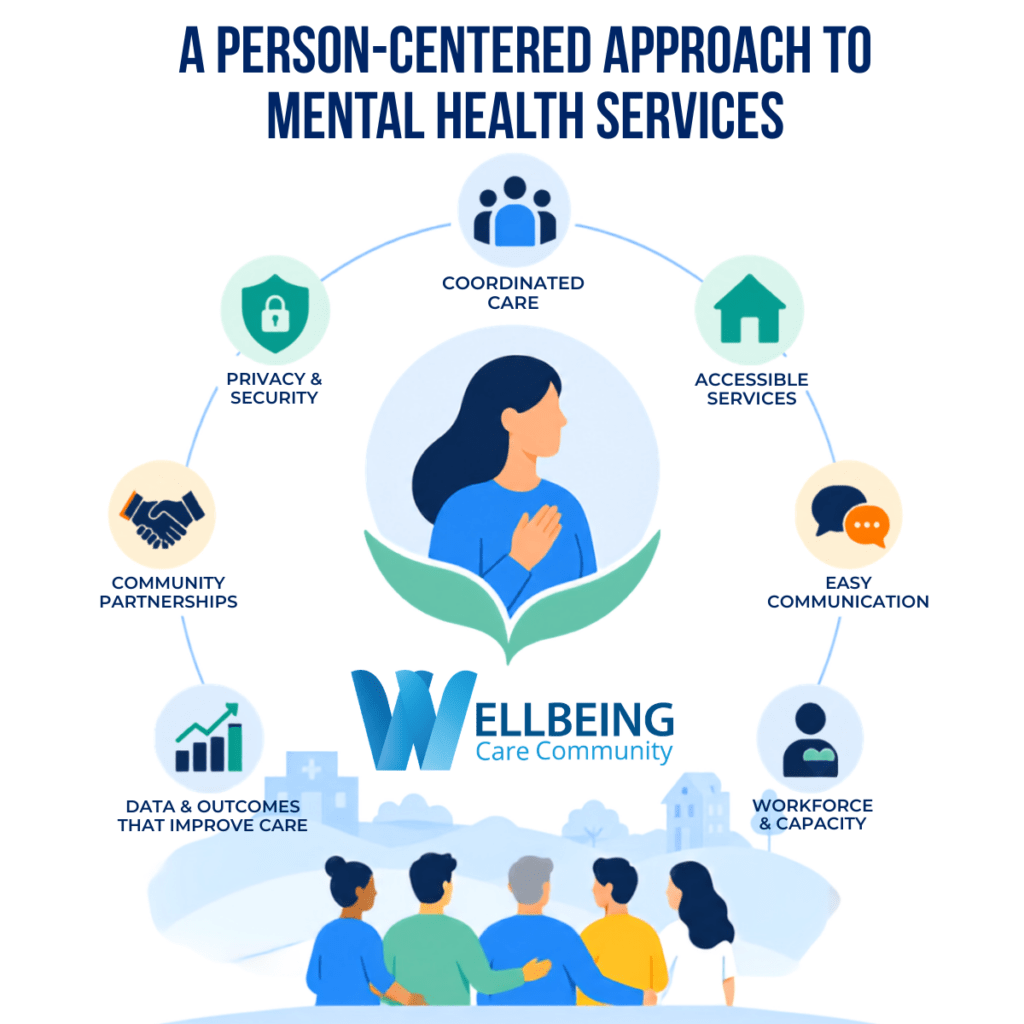
Many mental health organizations describe their services as person-centered. It has become one of the most widely used terms in behavioral health and community wellbeing.
But what does person-centered care look like in practice?
For many organizations, the idea is easy to support but much harder to implement consistently. Person-centered care is not simply a treatment model or a checklist. It is an approach that influences every interaction a person has with the care system, from their first assessment to ongoing support and long-term recovery.
Understanding what person-centered care truly involves can help organizations build services that improve outcomes while creating a better experience for the people they serve.
Looking Beyond the Diagnosis
Traditional mental health services often focus primarily on symptoms and diagnoses. While clinical treatment is essential, it only tells part of the story.
A person-centered approach looks at the individual as a whole.
This includes factors such as:
- Employment and financial security
- Family relationships
- Social support networks
- Cultural background
- Trauma history
- Access to community resources
Mental health is influenced by many aspects of daily life. Effective care plans recognize and address those broader needs alongside clinical treatment.
Focusing on Personal Goals
In traditional care models, treatment goals are often defined by providers.
Person-centered care starts by asking a different question:
What does success look like for the individual?
For one person, recovery may mean returning to work. For another, it may mean rebuilding relationships, finding stable housing, or participating more fully in their community.
When people help define their own goals, care becomes more meaningful and often more effective.
Care plans can then be designed around what matters most to the individual while still addressing clinical needs.
Supporting Continuous Care
Mental health challenges do not exist only during appointments.
People face challenges between visits, during care transitions, and when circumstances suddenly change.
A person-centered approach focuses on continuity rather than isolated encounters.
This can include:
- Care coordination across providers
- Community support connections
- Smooth transitions between services
- Proactive outreach when additional support may be needed
The goal is to maintain an ongoing support system rather than limiting care to scheduled appointments.
Giving Individuals a Voice in Their Care
A key principle of person-centered care is partnership.
People should have an active role in decisions about their treatment and support services.
This means:
- Understanding available options
- Providing informed consent
- Adjusting goals when circumstances change
- Sharing feedback without fear of negative consequences
When individuals feel heard and respected, they are often more engaged in their care and recovery journey.
Recognizing Cultural Differences
Mental health experiences vary across cultures, communities, and life experiences.
A person-centered approach recognizes that effective care cannot be one-size-fits-all.
Organizations should consider:
- Cultural beliefs about mental health
- Community values
- Workforce diversity
- Peer support opportunities
- Culturally appropriate services
Providing culturally responsive care helps build trust and improve engagement across diverse populations.
Connecting Clinical and Community Services
Many people receiving mental health services also need support beyond traditional healthcare.
Their needs may involve:
- Employment services
- Food support
- Benefits navigation
- Peer support programs
- Family services
Person-centered care depends on strong coordination between clinical providers and community organizations.
Without those connections, people often struggle to navigate multiple systems on their own.
Why Person-Centered Care Can Be Difficult to Sustain
Most organizations believe in the principles of person-centered care.
The challenge is maintaining those principles consistently on scale.
Fragmented Information
Important information is often spread across multiple systems.
Clinical records may exist in one platform while referral information, housing services, and community support data are stored elsewhere.
As a result, care teams may lack a complete picture of an individual’s situation.
Referrals That Go Untracked
Many referrals are made with good intentions but limited follow-up.
Without visibility into whether services were received, organizations cannot ensure individuals get the support they need.
Workforce Challenges
Strong relationships require time and consistent engagement.
High caseloads, staff shortages, and administrative burdens can make it difficult for care teams to provide the level of support person-centered care requires.
Measuring the Wrong Outcomes
Organizations are often evaluated using clinical metrics alone.
While those measures are important, they may not capture improvements in housing stability, employment, social connection, or quality of life.
True person-centered care requires a broader view of success.
The Role of Technology in Supporting Person-Centered Care
Technology cannot replace relationships, trust, or compassionate care.
However, it can help organizations overcome many of the operational challenges that make person-centered care difficult to sustain.
Effective care coordination platforms can support:
- Closed-loop referral management
- Care transition notifications
- Collaborative care planning
- Social Determinants of Health tracking
- Outcome measurement and reporting
These tools help care teams spend less time searching for information and more time supporting the people they serve.
Building a Strong Foundation for Better Care
Organizations that successfully implement person-centered care often have one thing in common: strong coordination and data infrastructure.
They can:
- Track referrals from start to finish
- Coordinate services across organizations
- Respond proactively to changing needs
- Measure outcomes that matter to the people they serve
These capabilities make it easier to deliver care that remains focused on the individual rather than the system.
Final Thoughts
Person-centered mental health care is more than treating symptoms. It focuses on understanding the whole person, supporting their goals, respecting their choices, and connecting them with the services they need to thrive.
The principles themselves are not new. The challenge is creating systems and processes that allow those principles to be applied consistently.
Organizations that invest in care coordination, collaboration, and connected data systems are often better positioned to deliver the kind of person-centered support that individuals and communities deserve.
As mental health and community wellbeing programs continue to evolve, building the right foundation will be essential for turning person-centered care from an aspiration into everyday practice.
Schedule a personalized demo and see how WCC can help your organization deliver truly person-centered care.
https://calendly.com/etransxsolutions/lets-connect-to-discuss-needs