
Reducing Barriers in Healthcare Access: How Connected Systems Open the Door to Better Care
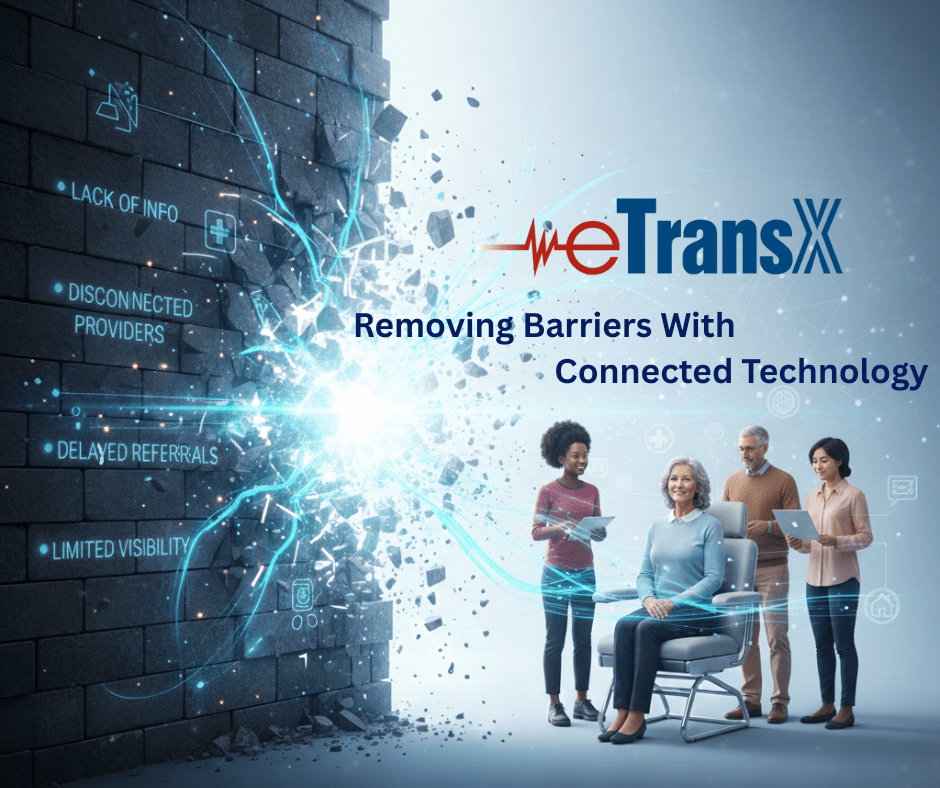
Healthcare access in the United States has improved in many areas, yet millions of individuals still face obstacles that prevent them from receiving timely, effective, and coordinated care. These barriers, ranging from data silos to fragmented care networks, create real challenges for both patients and the providers who support them.
Today, technology and community collaboration are changing the landscape. Platforms like eTransX’s Wellbeing Care Community (WCC) system enable organizations to break through long-standing barriers and deliver more connected, person-centered care.
Understanding the Barriers People Face
1. Fragmented Care Networks
Patients often interact with multiple providers, like primary care, specialists, mental health counselors, and social service agencies, but their information rarely travels with them. This leads to gaps, delays, and duplicated efforts.
2. Limited Visibility into Community Resources
Clinicians often want to help address social needs such as food insecurity, housing, transportation, and mental health support, but they don’t always know what resources are available or how to refer patients efficiently.
3. Slow or Manual Referral Processes
Paper forms, emails, or disconnected systems can delay referrals, allowing individuals’ needs to fall through the cracks.
4. SDOH Data Not Integrated into Clinical Workflows
Social Determinants of Health (SDOH) have a major impact on outcomes, yet SDOH data often sits outside the patient’s clinical record, limiting holistic care.
Closing that gap is the purpose of social drivers of health coordination:screening, referral, and confirmed result in one connected workflow instead of three disconnected ones.
5. Technology Gaps in Underserved Communities
Organizations serving vulnerable populations often lack modern systems, creating digital divides that further restrict access.
Breaking Barriers with Connected Technology
This is where eTransX’s Wellbeing Care Community platform becomes a powerful enabler.
1. Unified Data Sharing Across Sectors
WCC securely integrates data from hospitals, clinics, nonprofits, government agencies, and community partners, creating a single shared story of care.
This allows every provider to see the patient’s needs, history, referrals, and progress.
2. Faster, Digital-First Referrals
Instead of relying on phone calls or paperwork, the WCC platform streamlines referrals with:
- Automated routing
- Real-time status tracking
- Instant updates to all stakeholders
This reduces delays and dramatically improves follow-through.
3. High-Visibility SDOH Insights
The platform captures and organizes SDOH information so providers can:
- Understand risk factors
- Prioritize urgent needs
- Align services based on whole-person needs
Better insights lead to better outcomes, providing an ideal population health management system.
4. Seamless Care Coordination
Care teams across multiple organizations can collaborate through shared plans, tasks, notes, and alerts.
Patients no longer need to repeat their stories or navigate complex systems alone, and providers share information as part of an integrated community wellbeing management system.
5. Empowering Underserved Organizations
Small and mid-sized community agencies can adopt WCC’s advanced digital tools without heavy technical investment.
This promotes equity in access and strengthens the overall care ecosystem, and gives community health workers (CHWs) a powerful, flexible system to streamline their work and serve more people.
The Impact: A System Where No One Is Left Behind
When barriers are removed, the entire community benefits:
- Patients experience timely, personalized, and coordinated care.
- Providers save time, reduce duplication, and make better-informed decisions.
- Community organizations collaborate more effectively.
- Health systems improve outcomes while reducing costs.
Most importantly, technology helps build a more connected, compassionate, and accessible healthcare system, one where everyone receives the support they need.
Conclusion: Turning Obstacles into Opportunities
The transition toward integrated, barrier-free healthcare is no longer optional. It’s essential. With rising needs, limited resources, and an increased focus on whole-person health, communities must find solutions that bring everyone together.
eTransX is committed to leading this transformation by breaking down barriers and making collaboration seamless.
Improving healthcare access isn’t just a goal. It’s the path to healthier individuals, stronger families, and more resilient communities.
For more information on WCC, visit www.etransx.comorwww.wellbeingcarecommunity.com.
Or start the conversation now by booking an appointment here. Schedule a Call with eTransX – eTransX Wellbeing Care Community.
For more on WCC, see SDOH screening and closed-loop referral coordination, or the fullWellbeing Care Community platform.