The Wellbeing Care Community poverty alleviation solution unites community-based organizations, health, social services and more to address Community Care Coordination needs.

SUD Crisis Response

The Crisis – A Complex and Escalating Epidemic
Substance use disorder is causing serious harm to families and communities across the country, especially because of dangerous drugs like fentanyl. Overdoses are at record levels, and the effects are felt everywhere. Emergency rooms are overwhelmed, more children are entering foster care, and the justice and public health systems are under heavy strain.
Despite increased awareness and new funding, including opioid settlement dollars, support remains fragmented. Prevention, treatment, harm reduction, and recovery services often operate in silos, leaving people in crisis to cycle between systems without lasting help.
“Individuals in crisis are met with a disconnected maze of providers, paperwork, and delays.”
Communities also lack clear data to track outcomes or improve programs. What’s needed is a coordinated, accountable, community-centered approach that connects care and supports long-term recovery.
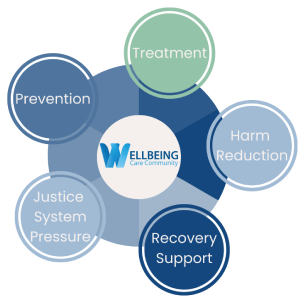
Wellbeing Community Care:
Integrated Infrastructure for Community SUD Strategy
The Wellbeing Care Community (WCC) platform was purpose-built to unify and strengthen community SUD responses. It enables a “no wrong door” system that aligns prevention, treatment, harm reduction, and recovery stakeholders around shared goals, plans, and metrics.
Personalized Recovery Plans:
Support whole-person care, housing, employment, mental health, MAT adherence within a single client record.
Cross-Sector Referral Management:
Streamline referrals between detox centers, counseling, peer support, harm reduction teams, and housing providers. Ensure warm handoffs and track closure.
Plan of Safe Care (POSC) Integration:
Manage federal compliance for maternal-infant care with built-in care pathways.
Peer and Outreach Support Tools:
Mobile apps enable peer coaches and navigators to stay connected, update progress, and respond to needs in real time.
Data & Public Reporting Tools:
Built-in dashboards support local health departments, managed care organizations, and state agencies in demonstrating impact, cost avoidance, and equitable access.
WCC is aligned with national frameworks, including SAMHSA’s Crisis Care model and
the “Pledge to Connect” post-overdose follow-up strategy.
The Strategic Advantage:
Scalable, Accountable SUD Response
For Individuals
WCC delivers stability and hope. Individuals no longer have to navigate systems alone or repeat their story. Instead, they gain a personalized team, consistent support, and a clear path forward reducing relapse risk and improving long-term wellbeing.
For Providers
Whether behavioral health specialists, peer navigators, or housing coordinators, providers benefit from coordinated workflows, fewer drop-offs, and the ability to see and support the full recovery picture. Shared records reduce duplication and streamline care.
For Communities and State Agencies
Whether behavioral health specialists, peer navigators, or housing coordinators, providers benefit from coordinated workflows, fewer drop-offs, and the ability to see and support the full recovery picture. Shared records reduce duplication and streamline care.
Why It Matters
- Built for compliance with HIPAA, 42 CFR Part 2, and Medicaid documentation standards.
- Adaptable for urban, suburban, and rural coalition structures.
- Proven to enhance SUD ecosystem collaborations across justice, housing, health, and public safety.
- Enables equitable, outcome-focused investment of opioid settlement and grant funds.
The WCC platform is more than technology; it’s the infrastructure communities need to combat substance use disorder with compassion, coordination, and accountability.
Copyright © 2010-2026. eTransX, Inc. All rights reserved. | Privacy Policy